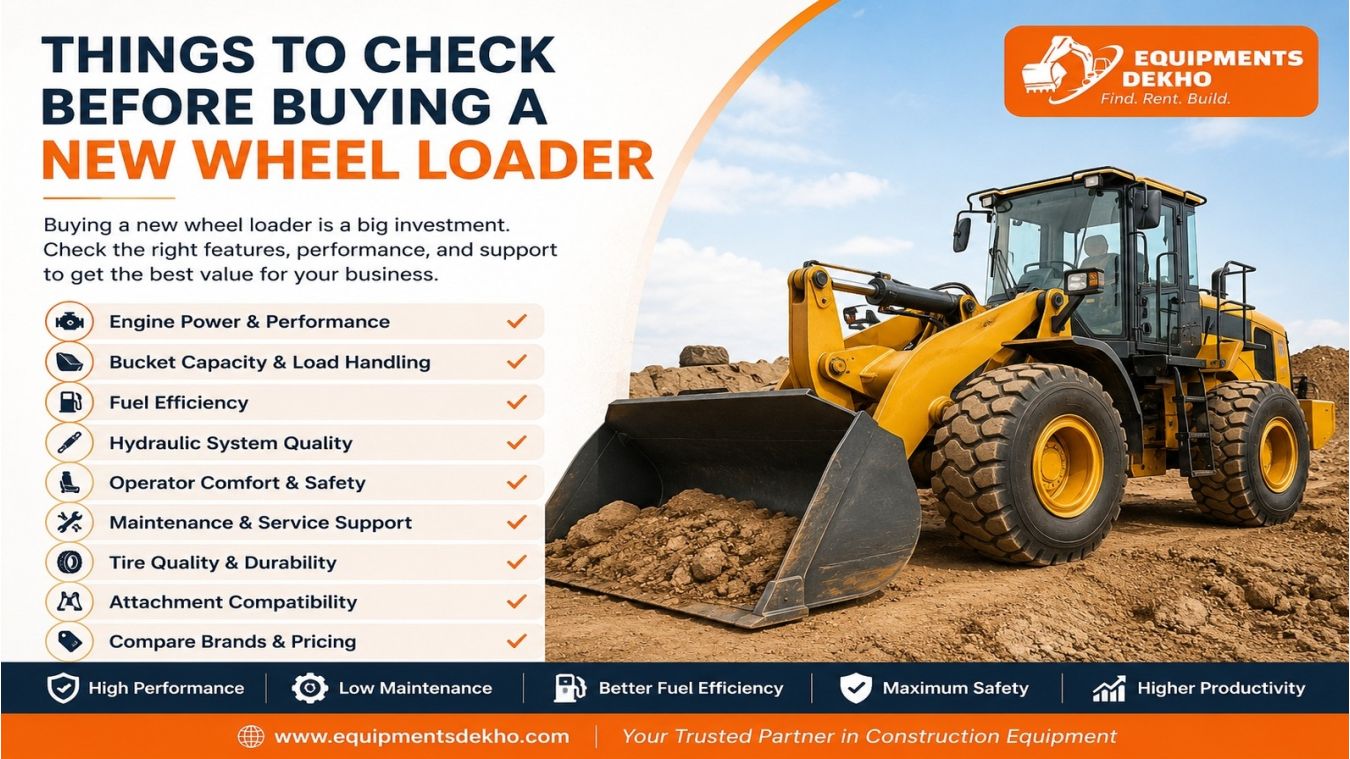
Wheel loaders are one of the most important machines used in construction, mining, agriculture, and infrastructure projects. Whether you are moving heavy materials, loading trucks, or handling site preparation, a wheel loader can improve efficiency and reduce manual labor. However, buying a new wheel loader is a major investment, and selecting the wrong machine can increase operational costs and reduce productivity.
Before purchasing a wheel loader, it is important to evaluate several factors such as engine performance, operating capacity, fuel efficiency, attachments, maintenance support, and overall durability. At Equipments Dekho, you can compare different models and choose the right equipment for your business needs.
The first thing to consider before buying a new wheel loader is the type of work you will perform. Different projects require different loader sizes and specifications. For example, a compact wheel loader is suitable for small construction sites, while large wheel loaders are ideal for mining and heavy-duty operations.
You should analyze:
Choosing a wheel loader according to your project needs ensures better productivity and lower operational costs.
Engine performance plays a crucial role in the efficiency of a wheel loader. A powerful engine helps the machine handle heavy loads without affecting speed or fuel consumption.
When checking engine specifications, focus on:
A machine with the right engine capacity will perform smoothly even under tough working conditions. Avoid purchasing an oversized machine if your project does not require high power, as it can increase fuel expenses unnecessarily.
Bucket capacity determines how much material the loader can carry in a single cycle. The right bucket size directly impacts productivity and operational efficiency.
If the bucket is too small, it will require more cycles to complete the work. On the other hand, an oversized bucket may reduce machine stability and increase fuel consumption.
Common factors to consider include:
Always select a wheel loader with a bucket size that matches your operational requirements.
Fuel is one of the biggest operating expenses for heavy equipment owners. A fuel-efficient wheel loader can save a significant amount of money over time.
Modern wheel loaders come with advanced technologies that improve fuel efficiency, including:
Before buying, compare fuel consumption figures from different brands and models. A slightly expensive machine with better fuel efficiency can provide better long-term savings.
The hydraulic system controls the lifting and loading functions of the wheel loader. A strong and efficient hydraulic system improves lifting speed and operational performance.
You should check:
A high-quality hydraulic system ensures smooth operation and reduces downtime.
Operator comfort directly affects productivity. If the cabin is uncomfortable, operators may experience fatigue, reducing efficiency during long working hours.
Important cabin features include:
Safety features are equally important. Ensure the wheel loader includes:
A comfortable and safe operator environment increases work efficiency and minimizes accidents.
Maintenance is essential for the long life of any heavy equipment. Before purchasing a wheel loader, verify the availability of spare parts and service centers in your area.
Questions to ask include:
Reliable service support reduces downtime and ensures smooth operations for years.
Wheel loaders operate on rough surfaces, making tire quality extremely important. Poor-quality tires can increase operating costs and reduce machine stability.
Check for:
Choosing the right tires improves machine safety and performance in challenging environments.
Modern wheel loaders support various attachments, making them versatile machines for different tasks.
Common wheel loader attachments include:
If your projects require multiple functions, ensure the loader supports quick attachment changes. This increases flexibility and improves return on investment.
Before making the final decision, compare multiple brands and models. Consider:
Do not choose a machine based only on price. A cheaper loader may result in higher maintenance and fuel costs in the future.
Platforms like Equipments Dekho help buyers compare heavy equipment models, features, and prices easily.
Buying a new wheel loader is a long-term investment that requires careful evaluation. From engine power and bucket capacity to fuel efficiency and maintenance support, every factor plays an important role in machine performance and profitability.
Choosing the right wheel loader improves productivity, reduces downtime, and ensures better returns for your business. Always compare different models, inspect safety features, and evaluate service support before making your purchase.
For the latest wheel loader models, expert guidance, and equipment comparisons, visit Equipments Dekho and find the perfect machine for your construction needs.
What is the most important factor when buying a wheel loader?
The most important factor is selecting a wheel loader that matches your project requirements, including bucket capacity, engine power, and operating environment.
How do I choose the right wheel loader size?
Choose the loader size based on the material type, site conditions, and daily workload. Compact loaders work well for small projects, while larger models are ideal for heavy-duty tasks.
Why is fuel efficiency important in wheel loaders?
Fuel efficiency reduces operating costs and increases profitability, especially for businesses using loaders daily for long hours.
What safety features should a wheel loader have?
A wheel loader should include features like rear-view cameras, emergency brakes, rollover protection, anti-slip steps, and operator safety cabins.
How often should a wheel loader be serviced?
Regular servicing depends on usage hours and manufacturer recommendations. Routine maintenance helps improve machine life and reduce breakdowns.
Where can I compare wheel loader prices online?
You can compare wheel loader models, specifications, and prices on Equipments Dekho


Comments