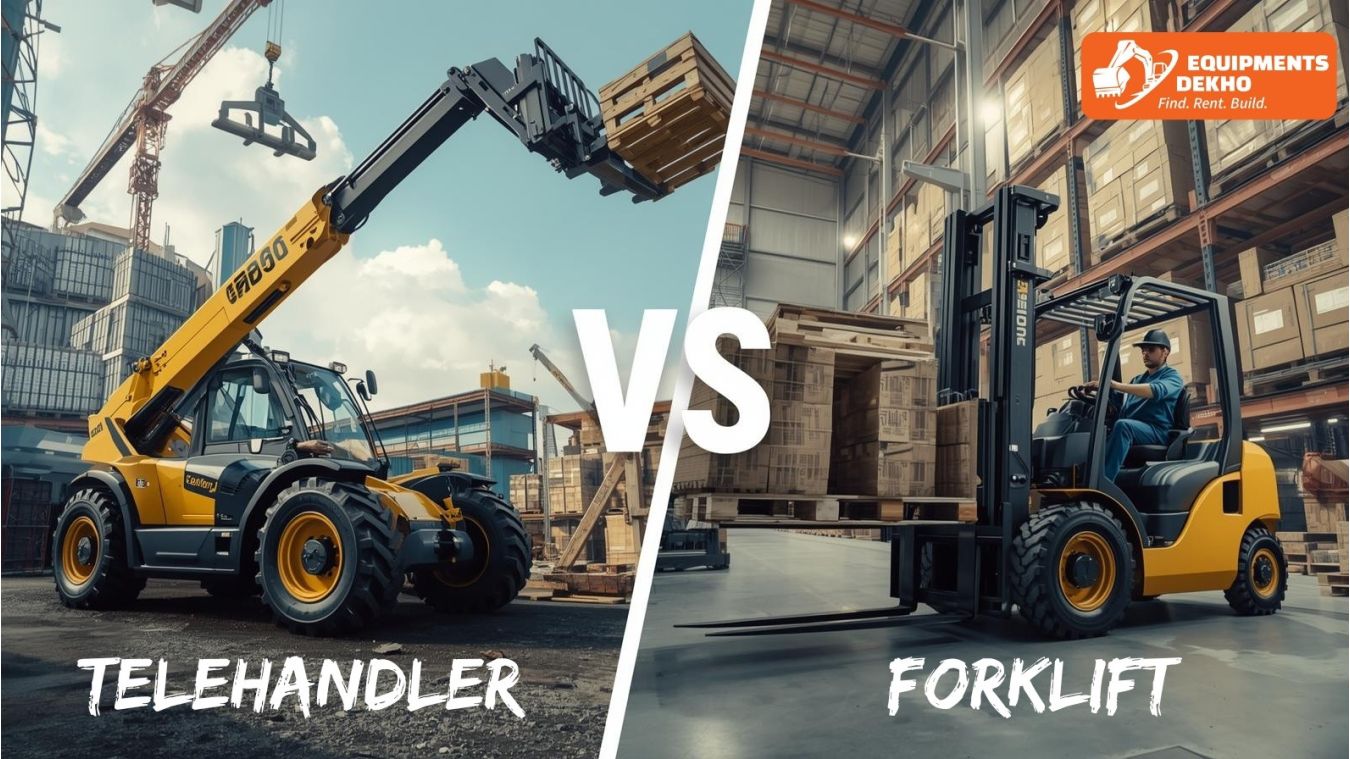
Choosing between a telehandler and a forklift can be surprisingly tricky. Both machines support lifting and material movement, but their performance varies big time depending on the environment and project needs. Making the right equipment choice can improve job safety, speed, and long-term cost efficiency.
Imagine this scenario: A contractor in Pune was working on a commercial building with materials that needed to reach upper floors. Their warehouse forklift couldn’t handle the uneven ground and limited vertical reach, resulting in constant delays. Switching to a telehandler improved height access and reduced lifting time by nearly 40%. That decision didn’t just boost productivity — it helped the project stay within timeline and budget.
A forklift is mainly designed for flat surfaces, tight aisles, and quick pallet handling. That makes it ideal for warehouses, manufacturing plants, ports, and industrial hubs. Forklifts are typically easier to operate, more affordable to rent or purchase, and offer excellent maneuverability in small spaces. When your work stays on solid ground and speed is the priority, a forklift remains one of the most efficient tools available.
A telehandler steps in when lifting needs go beyond standard reach. With its telescopic boom, it acts like a hybrid between a forklift and a crane. Telehandlers can lift materials to rooftops, scaffolding platforms, and elevated structures — all while working on rough or uneven terrain. They shine in infrastructure development, road and rail projects, and high-rise construction where height and distance are crucial factors. While the initial cost is higher, telehandlers can reduce manual labour and even replace multiple machines on-site.
One major project in Ahmedabad highlighted this perfectly — using a forklift outdoors led to load instability on uneven surfaces, causing safety concerns and operational delays. As soon as a rough-terrain telehandler arrived, the work became smoother and safer. The difference was night and day.
In simpler terms: forklifts excel in controlled indoor environments, while telehandlers dominate outdoor and elevation-heavy tasks.
If your work focuses on repetitive movement of pallets or materials inside warehouses or logistics centers, a forklift is the smartest investment. But as Indian construction becomes more vertical — especially in booming metro cities — telehandlers are gaining popularity for their reach, versatility, and stability on challenging ground conditions.
Both machines lift loads efficiently, but choosing the right one depends on the nature of your site.
Here is the easiest way to remember:
Smooth floors + tight spaces → Forklift
Outdoor + height access + rough terrain → Telehandler
Still debating between the two? Equipment Dekho can help you compare specifications, prices, and available rental options based on your exact project requirement. Choosing correctly now results in fewer delays, safer operation, and better financial outcomes later.
Sanjay Patel is a certified construction equipment technician, specializing in the repair and upkeep of excavators, loaders, and lifting equipment. With hands-on shop-floor experience, Sanjay shares maintenance hacks, troubleshooting tips, and durability reviews on Equipments Dekho to ensure machines run longer and safer.


Comments