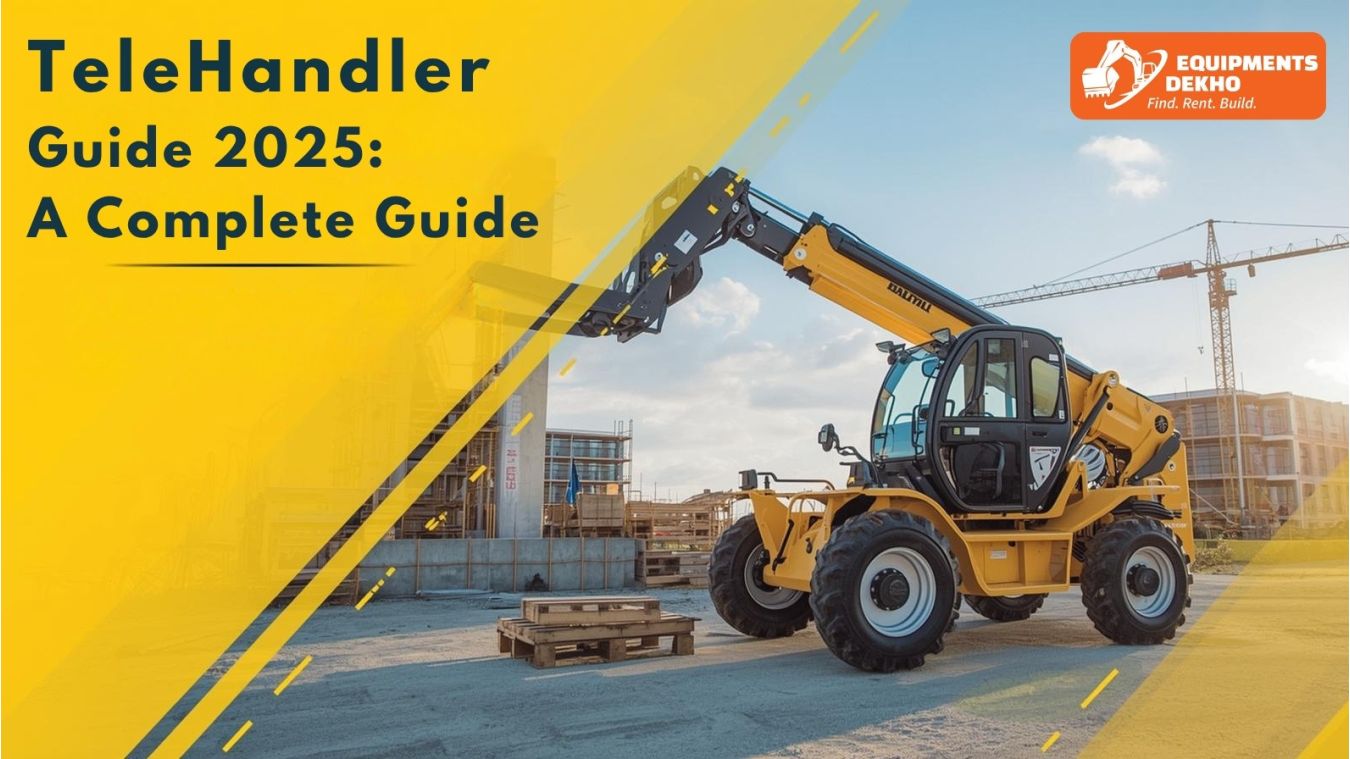
If there’s one piece of lifting equipment that can multitask better than most, it’s the telehandler. Part forklift, part crane, and part loader — this hybrid machine has become a favorite on construction sites where space is limited but lifting needs are high. In India, telehandlers are rapidly gaining traction on metro projects, warehouses, and industrial job sites because they replace multiple machines with one compact performer. In this 2025 guide, we break down types, uses, buying tips, and market insights — so you can confidently decide whether a telehandler is right for your project.
A telehandler (short for telescopic handler) is a versatile lifting machine equipped with a telescopic boom that can extend forward and upward. With the right attachments — forks, buckets, hooks, work platforms — one telehandler can load trucks in the morning, place heavy pipes at height by noon, and lift workers for maintenance in the evening. Many rental companies love them because clients get multiple capabilities in a single unit, saving money and yard space.
Telehandlers can be categorized based on reach, lifting capacity, and mobility, depending on project needs:
To understand their value, consider this example:
During a commercial building project in Pune, the contractor used a single telehandler to lift façade materials, unload cement pallets, and help with HVAC installation. What could have required a crane plus a forklift was efficiently handled by one operator — cutting equipment rental costs by nearly 30%.
Common jobsite uses include:
Telehandlers are adaptable — but choosing the wrong configuration can slow down productivity. Here are key factors buyers and renters should evaluate:
Height & Reach Requirements
Match the boom reach to the tallest lift location on your project. For example, a 10–17 m reach suits most commercial buildings, while industrial plants may demand 20+ m.
Load Capacity
Heavier loads require more powerful hydraulics and longer stabilizers. Always allow a safety margin for uneven construction terrain.
Attachment Compatibility
Buckets for loose materials, forks for pallets, hooks for lifting — ensure the machine supports multiple attachments if you want maximum return on investment.
Terrain & Maneuverability
Urban jobs prefer compact telehandlers; mining and infrastructure need 4WD rough-terrain models.
Operator Comfort & Safety Tech
Look for advanced stability control, telematics, visibility enhancements, and ergonomic operator cabins — these contribute to efficiency and safe operation.
Telehandlers can seem like a premium investment initially, but their ability to replace multiple types of equipment offers strong long-term ROI. Buyers in India are increasingly factoring in reduced downtime, less equipment maintenance, and high resale value when evaluating costs. Rental options also make adoption easier, especially for short-duration construction or seasonal warehouse work.
The Indian telehandler market is expanding fast due to rapid warehouse development, smart city infrastructure, and stricter safety regulations. Contractors who once relied on backhoe loaders or forklifts for lifting are now shifting to telehandlers for better reach, precision, and productivity. Rotating telehandlers are particularly emerging as a game-changer for tall building and industrial installations.
Telehandlers are no longer a luxury — they are becoming a must-have for any jobsite requiring height access and material handling without hassle. Whether you’re building housing towers in Delhi NCR or expanding a manufacturing facility in Gujarat, the right telehandler can simplify operations, save space, and boost efficiency.
If you’re planning future projects for 2025 and beyond, investing in a telehandler might just be the smartest move you make on your equipment lineup.
Sanjay Patel is a certified construction equipment technician, specializing in the repair and upkeep of excavators, loaders, and lifting equipment. With hands-on shop-floor experience, Sanjay shares maintenance hacks, troubleshooting tips, and durability reviews on Equipments Dekho to ensure machines run longer and safer.


Comments