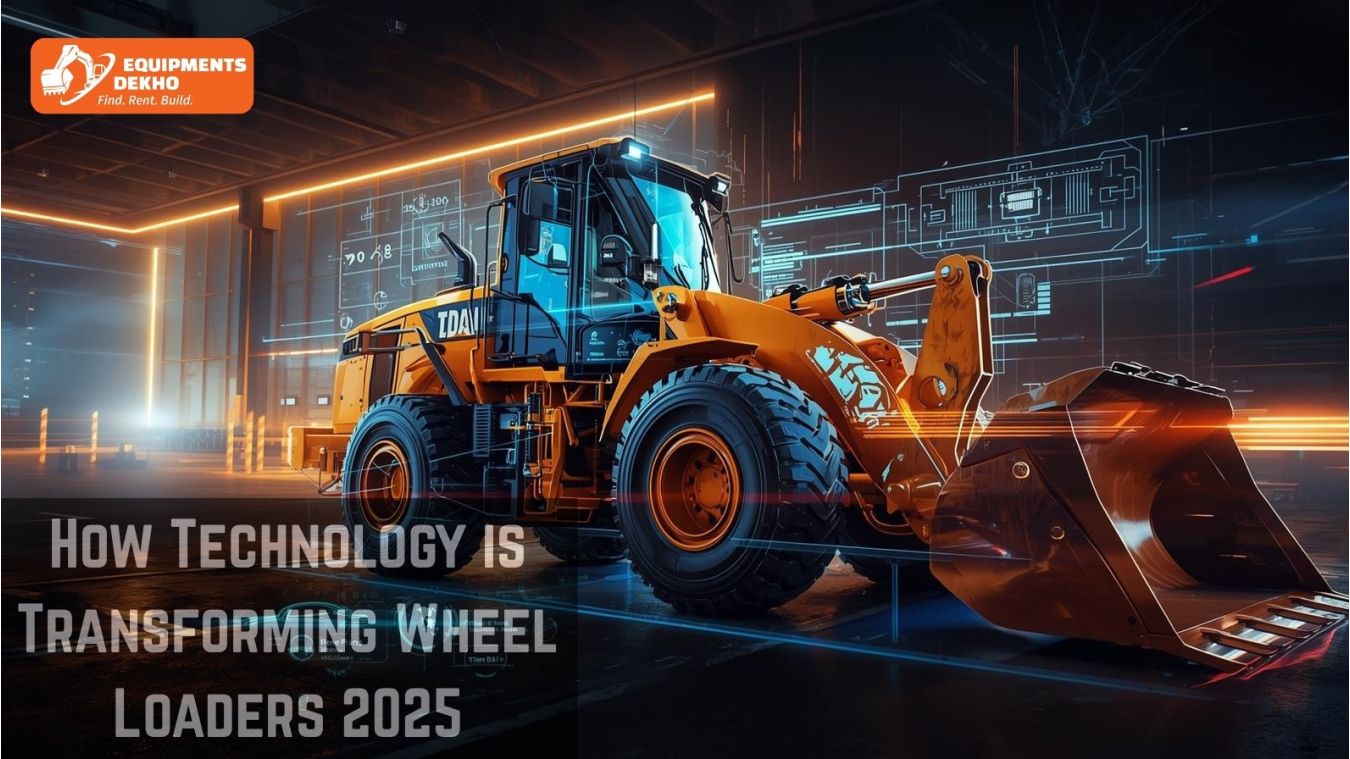
Wheel loaders in 2025 are no longer just about lifting and loading—they’re smarter, greener, and more connected than ever. Whether you're managing a quarry in Rajasthan or a logistics yard in Haryana, these technological upgrades can make a significant difference in your operations. Here's how:
Modern wheel loaders are equipped with advanced hydraulic systems that enhance performance and reduce fuel consumption. For instance, Volvo's new generation wheel loaders feature load-sensing hydraulics and Auto Bucket Fill technology, which automatically adjusts the throttle, lift, and tilt hydraulics to optimize bucket filling. This not only improves efficiency but also reduces operator fatigue and material spillage.
Similarly, Hitachi's Dash-7 models come with a payload weighing system that allows operators to check the weight of the load directly from the cab monitor, ensuring accurate loading and preventing overloading.
The push towards sustainability is evident in the rise of electric wheel loaders. Volvo's L25 Electric combines the proven compact wheel loader platform with battery power, offering zero-tailpipe emissions and significantly lower noise levels, making it ideal for urban construction sites and indoor operations.
Caterpillar has also introduced a hybrid 972 wheel loader, showcasing a retrofit that extends the machine's range while reducing fuel consumption and emissions.
Telematics technology is revolutionizing how contractors manage their fleets. Systems like Volvo's CareTrack, Hitachi's ConSite, and Caterpillar's VisionLink provide real-time data on machine location, usage, fuel consumption, and maintenance needs. This data enables proactive maintenance, reduces downtime, and helps in optimizing fleet utilization.
In India, where infrastructure projects are rapidly expanding, these telematics systems are becoming invaluable for contractors aiming to enhance productivity and reduce operational costs.
In regions like Gujarat and Maharashtra, where large-scale infrastructure projects are underway, the adoption of these advanced wheel loaders is on the rise. Contractors are leveraging smart hydraulics for faster cycle times, electric models for compliance with emission regulations, and telematics for efficient fleet management.
For example, in a recent project near Pune, a contractor reported a 15% increase in productivity after integrating telematics-equipped wheel loaders into their fleet. The real-time data allowed them to schedule maintenance proactively, reducing unexpected downtimes and improving overall project timelines.
As technology continues to evolve, the future of wheel loaders looks promising. Expect to see more hybrid models, enhanced automation features, and even greater integration with smart construction ecosystems. For Indian contractors, staying abreast of these developments can provide a competitive edge in an increasingly tech-driven industry.
Ankit Verma is a Civil Engineer with extensive experience in earthmoving and road construction projects. Over the years, he has worked with leading contractors, supervising the use of excavators, graders, and paving equipment. At Equipment Dekho, Ankit writes in-depth guides and equipment comparisons to help readers select the right machinery for their projects.