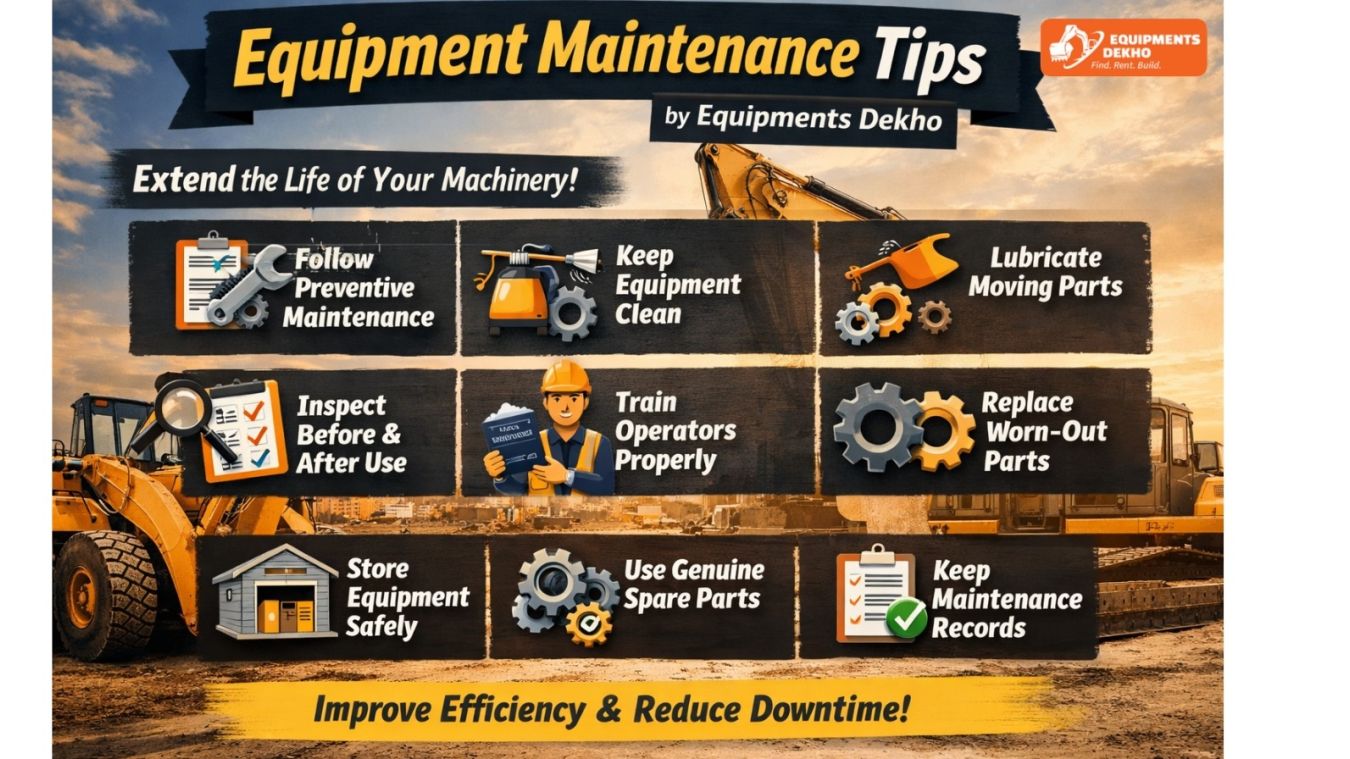
Proper equipment maintenance is essential for ensuring efficiency, safety, and long-term durability of machinery. Whether you are handling construction equipment, industrial machines, or heavy tools, regular upkeep plays a crucial role in preventing costly breakdowns and improving productivity. In this guide, Equipments Dekho shares practical and effective equipment maintenance tips that every business owner and operator should follow.
Maintaining your equipment is not just about fixing issues—it’s about preventing them. Well-maintained machinery operates more efficiently, consumes less fuel, and reduces downtime.
Key Benefits:
One of the most important equipment maintenance tips is to create and follow a preventive maintenance schedule. Instead of waiting for equipment to fail, regular inspections and servicing help detect issues early.
What to Include:
A scheduled approach ensures that no part of the machinery is overlooked.
Dust, dirt, and debris can significantly affect the performance of machinery. Cleaning your equipment regularly prevents buildup that may damage internal components.
Cleaning Tips:
Clean equipment not only performs better but also lasts longer.
Friction is one of the biggest enemies of machinery. Proper lubrication reduces wear and tear on moving parts.
Best Practices:
Regular lubrication ensures smooth operation and prevents overheating.
Routine inspections help identify potential problems before they become major issues.
Inspection Checklist:
Early detection can save time, money, and prevent accidents.
Even the best equipment can fail if not handled correctly. Proper training ensures that operators understand how to use and maintain machinery safely.
Training Should Cover:
Skilled operators reduce the risk of damage and improve efficiency.
Ignoring worn-out components can lead to bigger problems and expensive repairs. Always replace damaged or aging parts promptly.
Common Parts to Monitor:
Timely replacement keeps equipment running smoothly and safely.
Proper storage plays a crucial role in equipment maintenance. Exposure to harsh weather conditions can damage machinery.
Storage Tips:
Good storage practices help maintain equipment condition over time.
Keeping detailed maintenance records helps track equipment performance and identify recurring issues.
Records Should Include:
This data helps in planning future maintenance and improving efficiency.
Pay attention to how your equipment is performing. Any drop in efficiency or unusual behavior should be addressed immediately.
Signs to Watch:
Monitoring performance helps in early problem detection and prevents major failures.
Always use high-quality and genuine spare parts recommended by the manufacturer. Cheap or incompatible parts can damage equipment.
Benefits of Genuine Parts:
Investing in quality parts ensures reliability and safety.
Equipment maintenance is a critical aspect of any business that relies on machinery. By following these expert tips from Equipments Dekho, you can extend the life of your equipment, improve efficiency, and reduce operational costs. A proactive approach to maintenance not only saves money but also ensures safety and productivity in the long run.
1. What is equipment maintenance?
Equipment maintenance refers to the regular servicing, inspection, and repair of machinery to ensure it operates efficiently and safely.
2. How often should equipment be maintained?
Maintenance frequency depends on usage, but generally includes daily checks, weekly servicing, and monthly inspections.
3. Why is preventive maintenance important?
Preventive maintenance helps identify issues early, reduces downtime, and extends equipment lifespan.
4. What are the most common maintenance tasks?
Common tasks include cleaning, lubrication, inspection, and replacing worn-out parts.
5. How can I reduce equipment downtime?
You can reduce downtime by following a maintenance schedule, training operators, and using genuine spare parts.
6. What happens if equipment is not maintained?
Poor maintenance can lead to frequent breakdowns, increased repair costs, and safety risks.


Comments