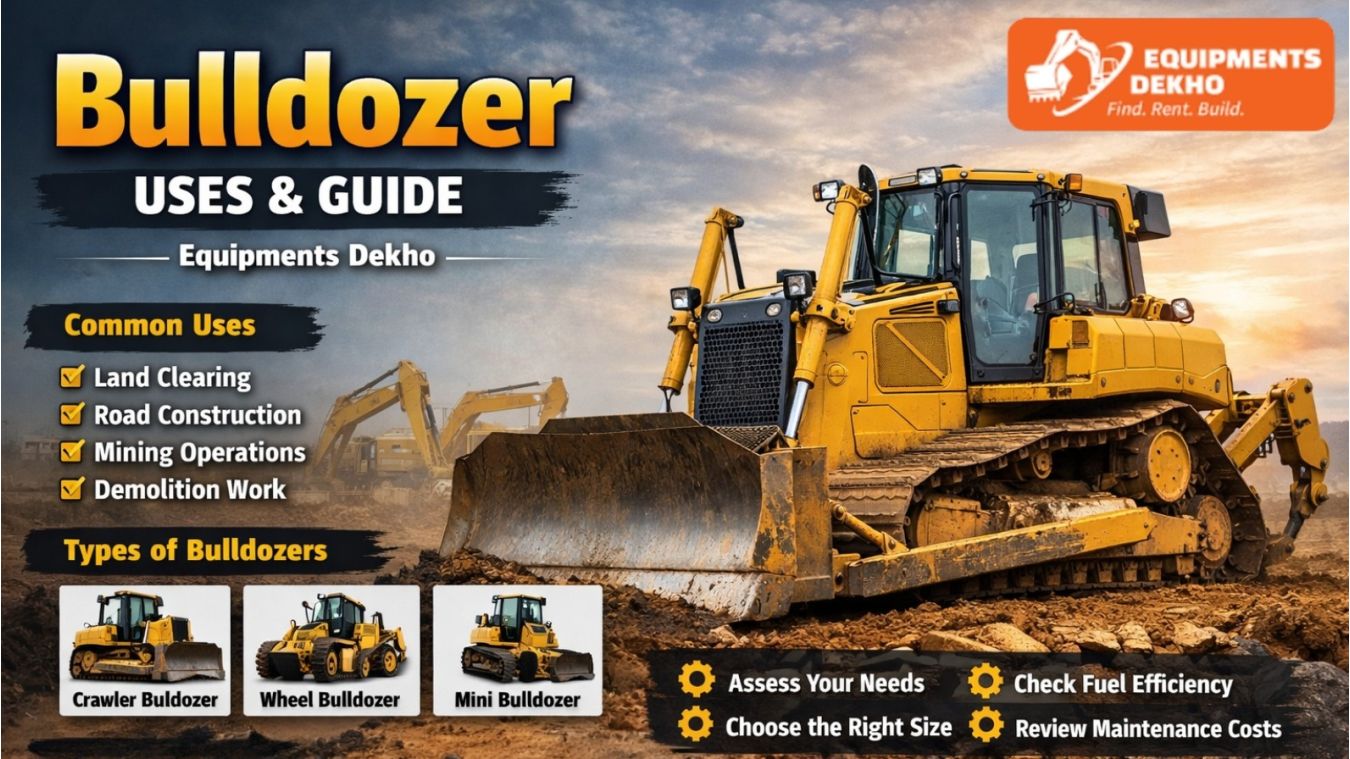
Bulldozers are among the most powerful and essential machines in the construction and earthmoving industry. Known for their strength, durability, and versatility, bulldozers are widely used for a variety of heavy-duty tasks. From clearing land to grading surfaces, these machines play a crucial role in infrastructure development. In this comprehensive guide by Equipments Dekho, we will explore bulldozer uses, types, features, and key factors to consider before choosing the right machine.
A bulldozer is a heavy construction machine equipped with a large metal blade at the front, used for pushing soil, sand, rubble, or other materials. It typically runs on tracks (crawlers), which provide excellent stability and traction on rough terrains. Some bulldozers also come with wheels, depending on their intended application.
1. Land Clearing
One of the primary uses of a bulldozer is clearing land for construction or agriculture. It efficiently removes trees, rocks, and debris, making the land ready for development.
2. Road Construction
Bulldozers are widely used in road construction projects. They help in leveling the ground, removing obstacles, and preparing a smooth base for further construction.
3. Mining Operations
In mining, bulldozers are used for moving large quantities of earth, clearing overburden, and maintaining haul roads. Their durability makes them suitable for harsh mining environments.
4. Grading and Leveling
Bulldozers are essential for grading land surfaces. They ensure even ground levels, which is crucial for building foundations and landscaping projects.
5. Demolition Work
These machines are also used in demolition to push down structures and clear debris quickly and safely.
6. Agriculture
In agricultural fields, bulldozers assist in land preparation, irrigation setup, and soil leveling, improving overall farm productivity.
1. Crawler Bulldozers
These are the most common types, equipped with tracks instead of wheels. They offer excellent grip and are ideal for rough and uneven terrain.
2. Wheel Bulldozers
Wheel bulldozers are faster and more maneuverable compared to crawler types. They are suitable for projects requiring speed and mobility.
3. Mini Bulldozers
Mini bulldozers are compact machines designed for small-scale projects or areas with limited space. They are cost-effective and easy to operate.
Blade
The blade is the most important part of a bulldozer. It comes in different types such as straight blade (S-blade), universal blade (U-blade), and semi-U blade, each suited for specific tasks.
Ripper
Located at the rear, the ripper is used to break hard soil, rocks, or pavement, making it easier for the blade to move materials.
Tracks or Wheels
Tracks provide better stability and traction, while wheels offer higher speed and flexibility.
1. Determine Your Project Needs
Before purchasing a bulldozer, identify the type of work you will be performing. Different projects require different types of machines.
2. Choose the Right Size
Bulldozers come in various sizes. Larger machines are suitable for heavy-duty tasks, while smaller ones are ideal for compact spaces.
3. Consider Fuel Efficiency
Fuel consumption plays a significant role in operating costs. Choose a model that offers good fuel efficiency.
4. Check Maintenance Requirements
Regular maintenance is essential for optimal performance. Select a bulldozer with easy access to parts and service support.
5. Budget and Financing
Evaluate your budget and explore financing options if needed. Investing in the right machine can significantly improve productivity.
With advancements in technology, modern bulldozers are becoming smarter and more efficient. Features like GPS tracking, automation, and fuel optimization systems are improving productivity and reducing operational costs. The future of bulldozers lies in sustainability, with manufacturers focusing on eco-friendly and energy-efficient models.
Bulldozers are indispensable machines in the construction and earthmoving industry. Their ability to handle tough tasks with ease makes them a valuable asset for any project. Whether you are involved in construction, mining, or agriculture, understanding bulldozer uses and features will help you make informed decisions. Equipments Dekho aims to provide you with the best insights to choose the right equipment for your needs.
1. What are the main uses of a bulldozer?
Bulldozers are mainly used for land clearing, grading, road construction, mining, and demolition work.
2. What is the difference between crawler and wheel bulldozers?
Crawler bulldozers use tracks for better stability on rough terrain, while wheel bulldozers offer higher speed and mobility.
3. Which bulldozer is best for small projects?
Mini bulldozers are ideal for small projects due to their compact size and cost-effectiveness.
4. How much does a bulldozer cost?
The cost varies depending on size, type, and features. It can range from a few lakhs to several crores.
5. Is operating a bulldozer difficult?
Operating a bulldozer requires proper training and experience, but modern machines are designed to be user-friendly.


Comments