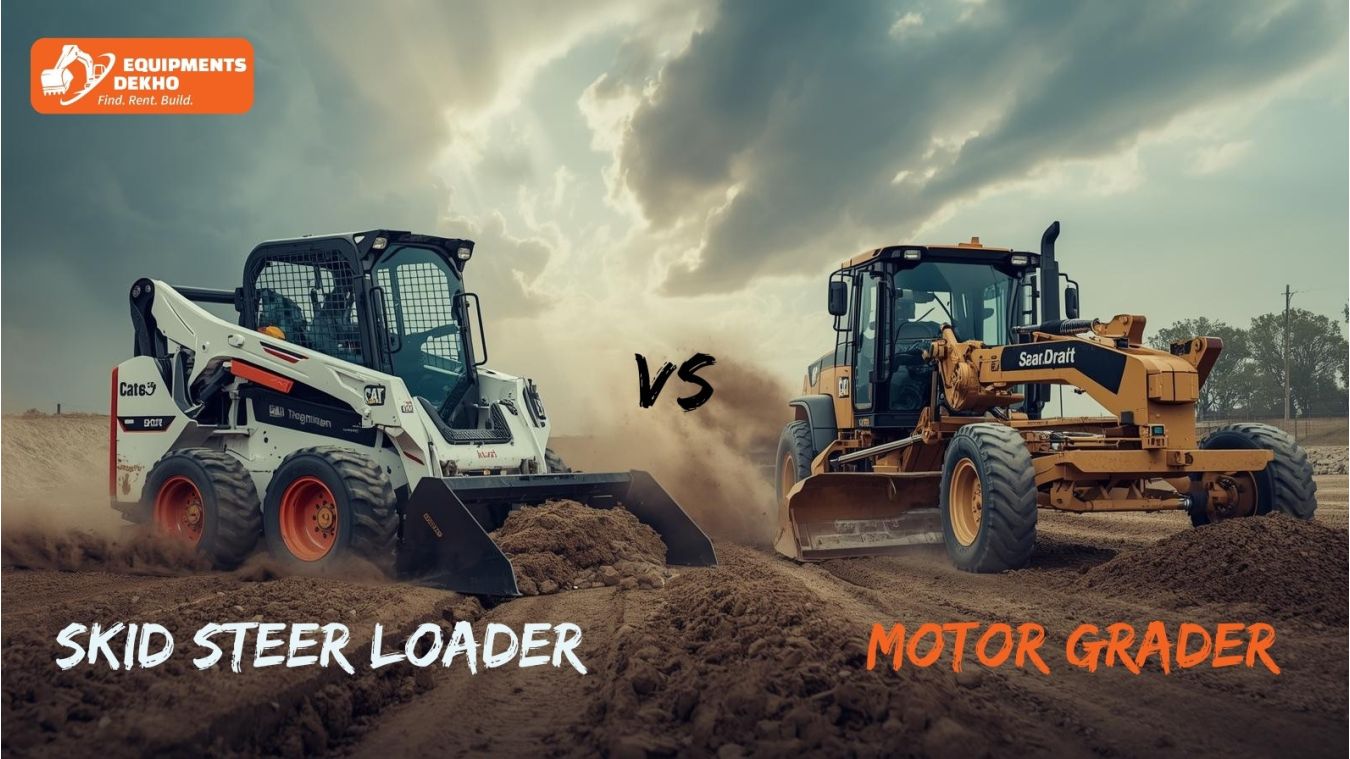
When it comes to compact earthmoving and site preparation, skid steer loaders and motor graders both bring unique advantages. But deciding which machine fits your project needs can be tricky. Understanding their strengths, limitations, and ideal applications is key to maximizing efficiency and ROI.
Skid steer loaders are small, maneuverable machines designed for tight spaces. Their compact size and ability to use multiple attachments—buckets, augers, trenchers, and pallet forks—make them ideal for urban construction, landscaping, and material handling projects. However, their limited pushing power and small load capacity make them less suitable for large-scale grading or road projects.
Motor graders are designed for leveling and finishing surfaces over large areas. With long blades and precise control systems, they excel at creating flat, smooth surfaces for roads, highways, and airfields. They are powerful and efficient for large projects but require more space to operate and are less agile in confined areas.
Choosing between a skid steer loader and a motor grader depends on project size, terrain, and operational requirements. Skid steer loaders shine in small-to-medium projects with tight spaces, offering high versatility and ease of maneuverability. Motor graders dominate large-scale grading tasks where precision, reach, and smooth surface finishing are priorities. Fuel efficiency, maintenance costs, and operator skill also factor into the decision.
Both machines have their distinct roles, and understanding your project’s requirements will help you select the right compact workhorse for maximum efficiency.
Ankit Verma is a Civil Engineer with extensive experience in earthmoving and road construction projects. Over the years, he has worked with leading contractors, supervising the use of excavators, graders, and paving equipment. At Equipment Dekho, Ankit writes in-depth guides and equipment comparisons to help readers select the right machinery for their projects.