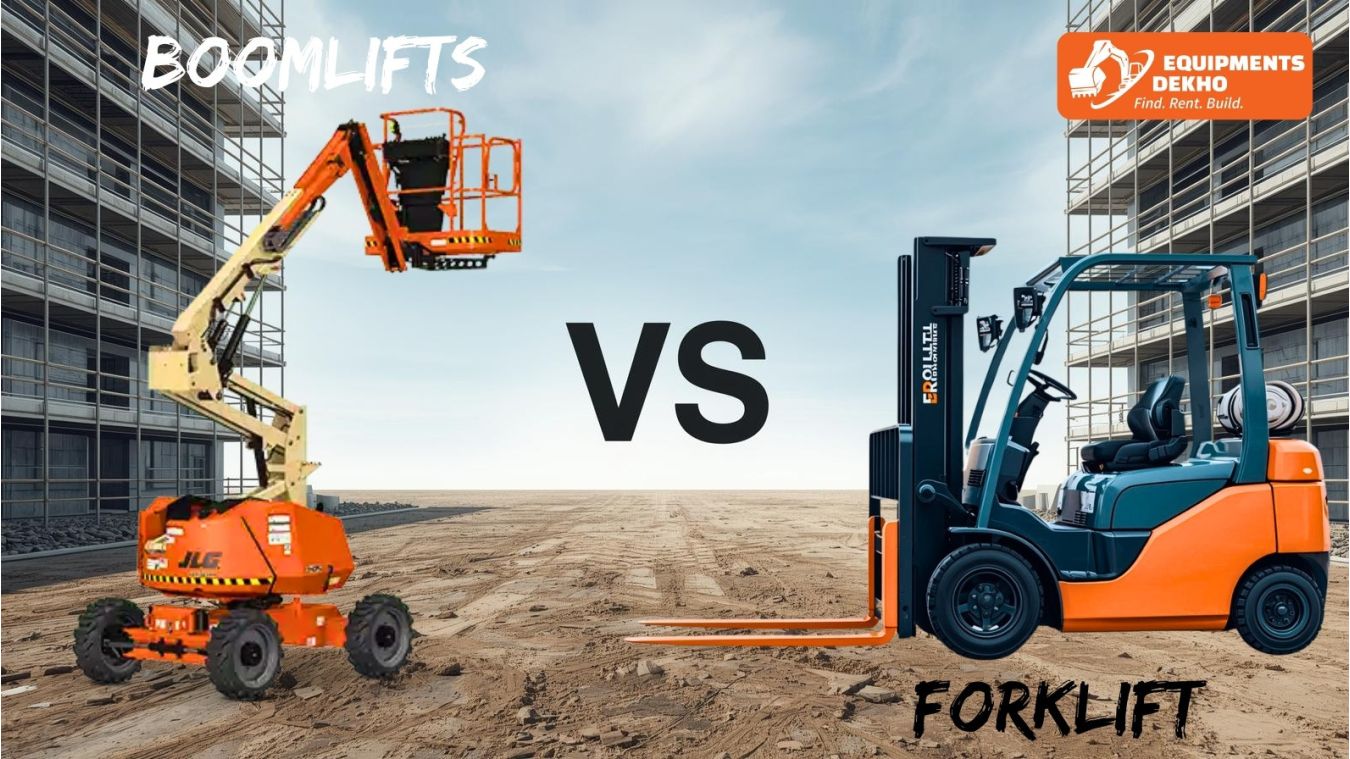
Material handling and lifting needs vary widely across construction, warehousing, and industrial projects — which is why equipment selection matters. Two machines often compared are forklifts and boom lifts. Although they both lift, they serve completely different purposes. Choosing the wrong one can slow teams down, reduce safety, and cause avoidable project delays. This blog breaks down how forklifts and boom lifts differ so you can confidently pick the right equipment for your operations.
Forklifts specialize in lifting and transporting loads horizontally. They are commonly used in warehouses, ports, factories, retail distribution, and even construction sites where palletized material needs to be moved quickly.
A forklift is the machine you want when the job involves:
In most industrial environments, forklifts support continuous material flow — one of the biggest drivers of productivity.
Boom lifts excel at lifting workers and tools vertically to higher and often harder-to-reach spaces. They make tasks at height safer and more efficient, especially where ladders and scaffolding fall short.
Boom lifts are commonly used for:
Think of a boom lift as your go-to access equipment when height and reach are the main challenges.
Forklifts shine in handling payload — their strength lies in how much weight they can lift and move efficiently at ground level. Boom lifts focus on access — allowing workers to maneuver vertically and horizontally, often at heights between 30–180 ft, depending on the model.
Safety considerations also differ. Forklift operators must manage stability while carrying heavy loads, whereas boom lift operators require secure platforms with harnesses and controls that keep them steady while elevated.
In real-world job sites across India, contractors often use both machines together — forklifts supply the materials, and boom lifts help teams install or fix them at height.
Because forklifts are used daily in most warehouse and industrial operations, owning them often makes sense financially. Boom lifts, however, are typically rented because their use is more project-specific, like glazing tall buildings or maintaining airport hangars.
Many growing logistics companies have recently adopted forklift fleets to support increasing throughput demands, while construction firms rely on a mix of boom lift rentals to handle temporary elevated work platforms across different sites.
It comes down to your core requirement:
In many cases, projects benefit from both — one keeps materials flowing, and the other ensures safe access to heights.
Forklifts and boom lifts are both crucial tools, but they solve very different challenges. Understanding whether your priority is material handling or working at height will help you make the right investment or rental decision. As the Indian construction and logistics sectors modernize, choosing the right lifting equipment has become a strategic move that directly impacts safety, efficiency, and profitability.
Sanjay Patel is a certified construction equipment technician, specializing in the repair and upkeep of excavators, loaders, and lifting equipment. With hands-on shop-floor experience, Sanjay shares maintenance hacks, troubleshooting tips, and durability reviews on Equipments Dekho to ensure machines run longer and safer.


Comments