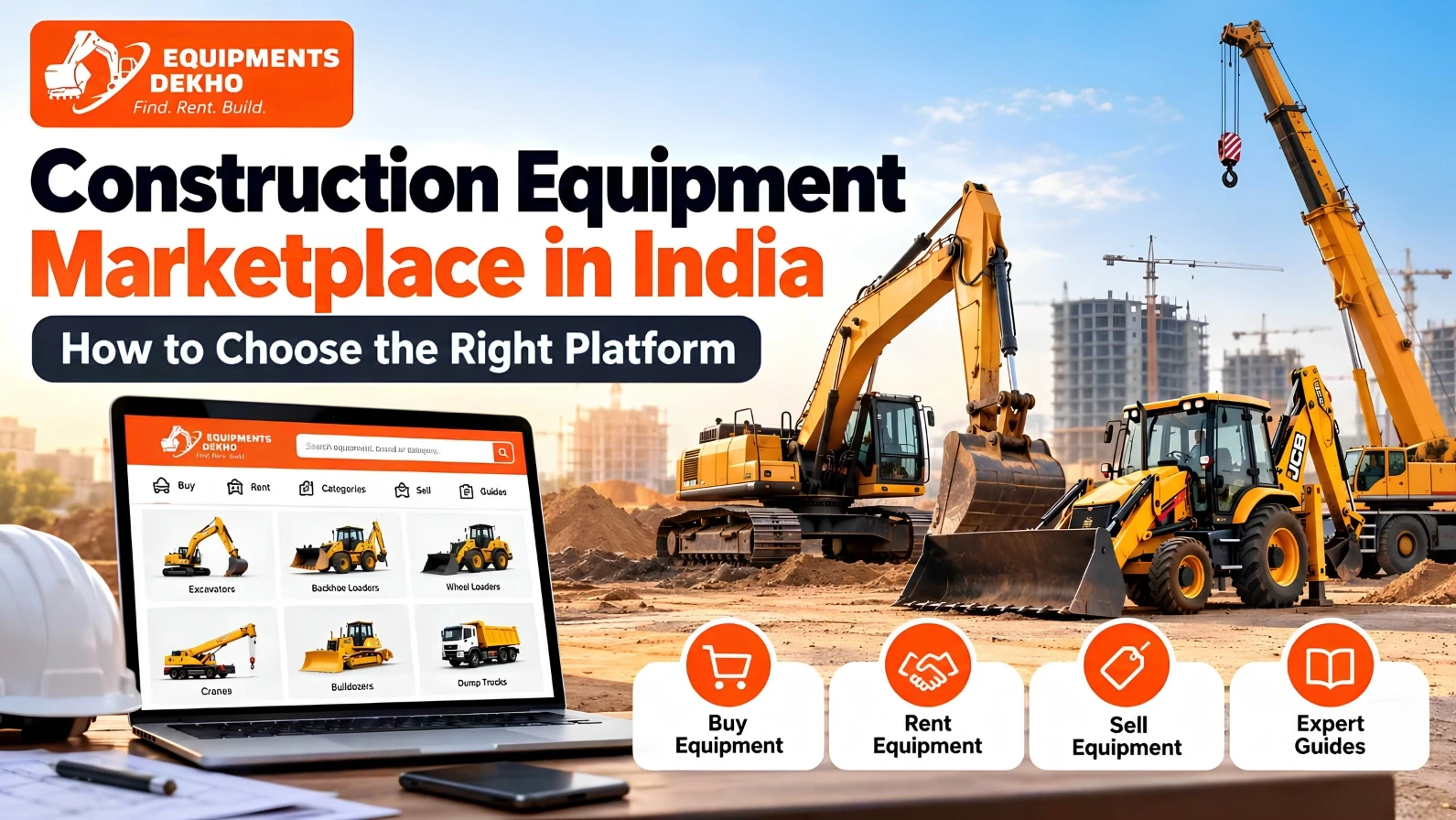
Finding the right construction equipment can be a challenge for contractors, builders, and equipment owners. You may need an excavator for a road project, a JCB backhoe loader for site work, or a crane for lifting heavy materials. Buying new equipment can require a large investment, while finding reliable used machines or rental options can take time.
A construction equipment marketplace makes this process easier by bringing equipment listings together in one place. Buyers can explore available machines, equipment owners can connect with potential customers, and contractors can compare options before making a decision.
Equipments Dekho helps people across India rent, buy, or sell construction and heavy equipment through trusted listings, fair pricing, and expert guides.
But how do you choose the right marketplace? In this guide, we will explain what to look for, how to compare listings, and which steps can help you make a more informed equipment decision.
A construction equipment marketplace is an online platform where buyers, sellers, rental providers, and equipment owners can explore equipment-related listings.
Instead of contacting multiple dealers or relying only on local references, users can browse available options and compare machines based on their needs.
Common equipment categories found on these platforms include:
An online construction equipment marketplace can support three main activities: buying, selling, and renting equipment.
For example, a contractor handling a short-term excavation project may prefer renting an excavator instead of purchasing one. An equipment owner with an idle machine may want to list it for sale or rent to another contractor.
The right platform helps both parties discover suitable options and start the conversation.
India has a wide range of construction projects, from residential buildings and highways to industrial sites and infrastructure development. Different projects require different types of machinery, and the right choice depends on budget, workload, location, and project duration.
Here are five practical benefits of using an online marketplace.
Searching for equipment through individual dealers can take time. An online marketplace allows you to explore different listings and compare available machines.
You can look at factors such as machine type, model, year, condition, location, and asking price, wherever the information is available.
For instance, if you need a backhoe loader for a building project, comparing several listings can help you identify machines that match your budget and work requirements.
Not every project requires equipment ownership.
A long-term contractor may benefit from buying a machine, while a small contractor working on a two-week project may find renting more practical.
A marketplace that supports both buying and renting helps users consider different options before committing their budget.
Equipment owners may struggle to find buyers beyond their local network. Online listings can help them present their machines to a wider audience.
Similarly, buyers can discover equipment listed by different owners and suppliers without depending on a single source.
However, listing visibility and enquiries depend on the platform, location, equipment demand, and quality of the listing.
A well-organised marketplace reduces the effort involved in finding relevant machines.
Instead of starting every search from scratch, users can browse equipment categories and shortlist suitable options.
This does not remove the need for inspection or price negotiation. It simply makes the initial search more organised.
Equipment purchases involve more than the listed price. Machine condition, service history, transport costs, maintenance needs, and expected usage can all affect the final decision.
Comparing listings helps you identify the questions you need to ask before making a commitment.
Not every platform offers the same features or level of information. Before choosing a heavy equipment marketplace in India, check whether it supports your requirements.
Here are seven important factors to consider.
Start by checking whether the platform lists the type of machine you need.
A contractor searching for an excavator should be able to explore relevant excavator listings rather than browse unrelated equipment.
Look for platforms that cover the main categories used in your industry, such as loaders, cranes, road construction equipment, and material-handling machinery.
A wider selection can be useful, but relevance matters more than the number of listings alone.
A good listing should provide enough information to help you understand what is being offered.
Before shortlisting a machine, check for:
If important details are missing, contact the seller or rental provider before proceeding.
Practical tip: Do not select a machine only because it has the lowest asking price. A cheaper machine may need repairs, replacement parts, or additional transportation.
Before you buy heavy equipment or rent heavy equipment, try to confirm who owns or supplies the machine.
Ask for relevant ownership or authorisation documents, equipment records, and any other paperwork required for the transaction.
If the platform provides seller information or listing checks, review those details as well.
Remember that a listing on a marketplace does not automatically guarantee the machine's condition, ownership, or performance. Complete your own checks before paying or signing an agreement.
Equipment transportation can add a significant amount to your project cost.
For example, a machine available at a low price in another state may become less attractive after transport, loading, unloading, and delivery expenses are included.
Choose a marketplace that allows you to identify equipment in your preferred city, state, or project area when location information is available.
For rental equipment, also confirm delivery timelines, mobilisation charges, and whether the supplier can support your project schedule.
A marketplace should make it reasonably clear how users can proceed after finding a listing.
Before choosing a platform, check:
Read the platform's terms carefully. Do not assume that every marketplace handles payments, inspections, transport, or after-sales support.
Useful listings contain clear photographs, accurate descriptions, and relevant technical details.
Avoid relying on listings that use unclear images or provide little information about the machine.
Ask for additional photographs, a live video, or an inspection if needed. For a major purchase, consider arranging an independent mechanical inspection before finalising the deal.
Equipment decisions can be complicated, especially when comparing used machines or calculating rental expenses.
A platform with educational guides can help users understand equipment types, pricing factors, maintenance needs, and questions to ask sellers.
Equipments Dekho combines equipment listings with expert guides to help users research their options before making a decision.

The right choice depends on how often you use the machine, how long you need it, and the total cost of ownership.
Buying may make sense if your business uses the same machine regularly across multiple projects.
For example, a contractor who frequently handles excavation work may benefit from owning an excavator, provided the expected savings justify the purchase, maintenance, and financing costs.
Before buying, estimate the total cost of ownership and consider how easily you could resell the machine if your requirements change.
Renting may be a better option when you need a machine for a limited period or want to avoid a large upfront investment.
For example, a contractor handling a short roadwork project may rent a roller for the required period instead of buying one.
Compare the total rental cost, including transport, fuel, operator charges, deposits, and any additional fees specified in the agreement.
Quick rule: If you need a machine regularly for years, evaluate ownership costs. If you need it only for a specific project, compare rental options first.
A structured process can help buyers and sellers avoid common mistakes.
Accurate listings help potential buyers understand what you are offering and decide whether the equipment suits their needs.
Used equipment can offer value, but its condition matters more than its appearance alone.
A machine that looks clean may still have mechanical problems. Always check the equipment's working condition before making a final decision.
Use this checklist during your initial assessment.
For expensive machinery, a qualified mechanic or equipment inspector can identify problems that may not be obvious during a basic visual check.
Do not make an advance payment based only on photographs or verbal promises. Verify the seller and transaction details through appropriate checks.
Even experienced contractors can overlook important details when they need equipment quickly.
Avoid these five common mistakes.
The cheapest listing may not offer the best overall value. Compare condition, maintenance needs, transport expenses, and expected working life.
A machine located far from your project site may increase the total cost. Ask for a transport estimate before making your final decision.
Photographs and descriptions cannot replace a proper inspection. Check the machine's condition and documents before committing to a purchase.
For rented equipment, confirm the rental period, payment schedule, fuel responsibilities, operator arrangements, breakdown policy, and charges for delays or extended use.
Review any verification information the platform provides, but independently confirm ownership, condition, and other important details. Understand the platform's role in the transaction before proceeding.

Equipments Dekho helps buyers, sellers, contractors, and equipment owners explore construction and heavy equipment options in India.
Whether you want to buy a used excavator, find a JCB backhoe loader, rent machinery for a project, or list equipment you no longer need, the platform can help you begin your search.
Here is how you can use Equipments Dekho:
Explore equipment listings: Search for machines that match your project requirements.
Compare available options: Review relevant listing details before contacting a seller or rental provider.
Research equipment decisions: Use expert guides to understand equipment types, costs, and buying considerations.
List equipment for sale or rent: Explore the platform's available options for connecting with potential customers.
The best equipment choice depends on your project, budget, and working conditions. Use the available listing information to build a shortlist, ask the right questions, and verify important details before making a decision.
Looking for construction equipment in India? Visit Equipments Dekho at https://equipmentsdekho.com to explore available options and find equipment that fits your requirements.
Choosing the right construction equipment marketplace can make equipment research easier for contractors, buyers, sellers, and rental providers. However, the best platform is not simply the one with the most listings or the lowest prices. It is the one that helps you find relevant equipment, compare useful details, and make informed decisions.
Before purchasing or renting, consider your project requirements, total budget, machine condition, transportation costs, and supplier terms. If you are selling, provide accurate information and clear photographs to help potential buyers assess your equipment.
Equipments Dekho brings equipment listings and expert guides together to help users explore construction and heavy machinery options in India.
Visit https://equipmentsdekho.com to start exploring equipment options for your next project.
A construction equipment marketplace is an online platform where buyers, sellers, rental providers, and equipment owners can discover machinery listings. Users can compare available options and contact the relevant party to discuss a purchase or rental.
The right marketplace depends on the equipment you need, your location, the quality of available listings, and the support you require. Compare equipment categories, listing details, seller information, and transaction terms before choosing a platform. Equipments Dekho is an option for exploring construction and heavy equipment in India.
Yes, You can discover used excavators, loaders, cranes, and other machinery through online marketplaces. However, you should verify the seller, inspect the machine, review its maintenance records, and confirm the required documents before completing the purchase.
Buying may suit businesses that use a machine regularly over a long period. Renting may be more practical for short projects or occasional requirements. Compare the total ownership cost with the complete rental cost before deciding.
Check the engine, hydraulic system, undercarriage, operating hours, structural condition, service records, and ownership documents. Arrange a qualified inspection when possible and include repair and transportation costs in your budget.
Choose a relevant marketplace, prepare accurate equipment details, upload clear photographs, set a realistic asking price, and respond to enquiries. Share available service records and verify the buyer and payment arrangements before handing over the machine.
Prices depend on equipment type, make, model, age, condition, operating hours, location, demand, and included accessories. For rental equipment, duration, transportation, fuel, operator costs, and seasonal demand may also affect the total expense.
Yes, Contractors can explore rental options for specific projects, subject to local availability and supplier terms. Before confirming, check the rental period, delivery arrangements, operator requirements, fuel responsibilities, and breakdown policy.
Compare their specifications, working capacity, age, operating hours, maintenance history, condition, price, and expected operating costs. For rental machines, also compare the total cost for the required project period.
Use marketplace listings that provide location information to identify machines available in your city or project area. Confirm the machine's current location, availability, delivery time, and transportation charges directly with the relevant supplier.


Comments